Gas turbines operate under demanding conditions. High temperatures, extreme pressures, vibration, thermal cycling and continuous operation can gradually wear down critical components. Even with effective preventive maintenance, many gas turbine parts eventually require inspection, refurbishment or repair.
Understanding which gas turbine components are most commonly repaired can help plant managers, maintenance teams and engineers plan outages more effectively. It can also help operators determine which components may be candidates for repair rather than immediate replacement.
Gas turbine repair can involve everything from small dimensional corrections to extensive weld restoration, machining, coating, brazing and heat treatment. The appropriate repair depends on the component, the type and extent of damage, the operating history of the turbine and applicable engineering requirements.
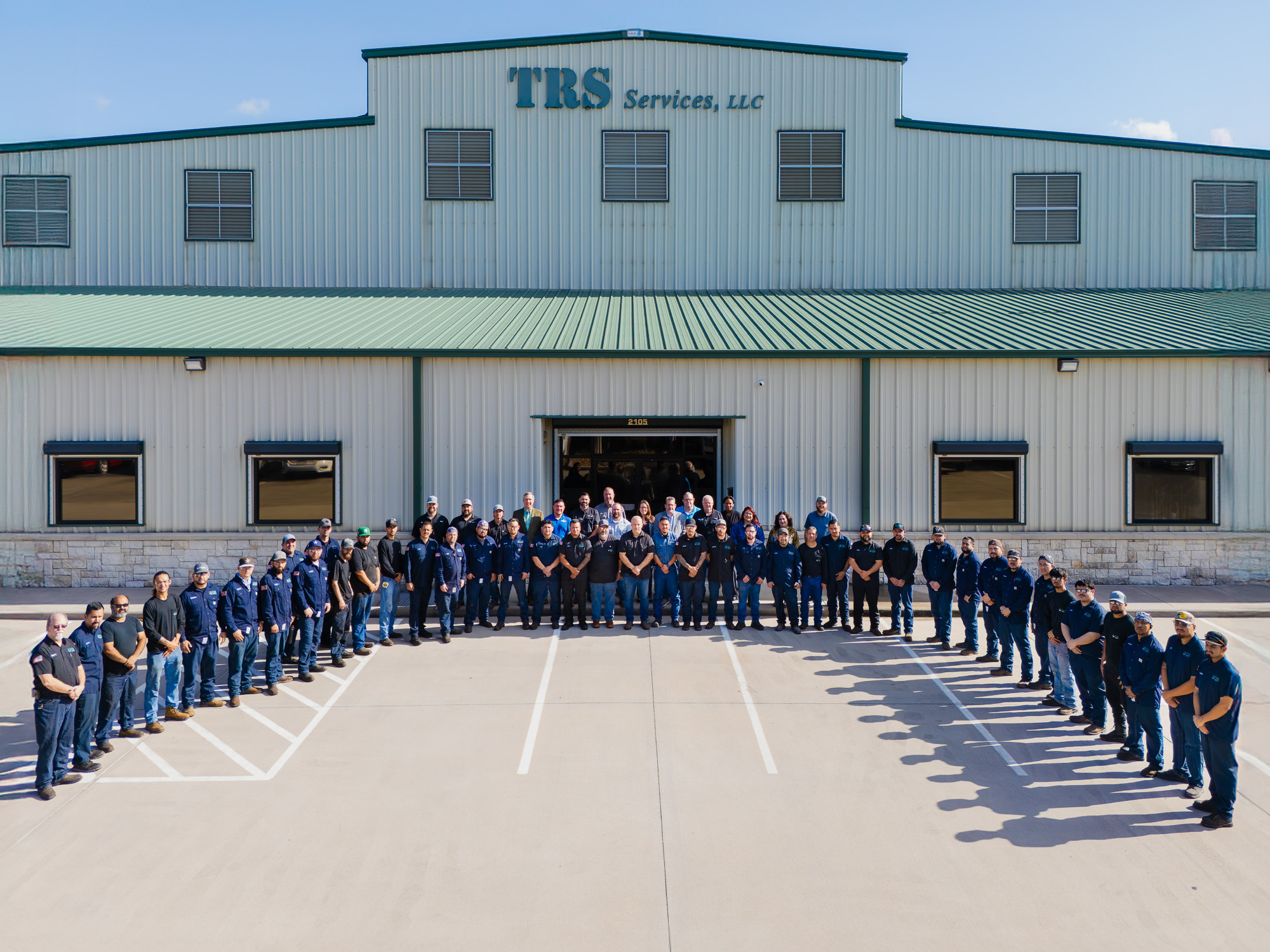
TRS Services provides turbine component repair for a wide range of industrial gas turbine components and supports equipment from GE, Siemens, Alstom, MHI, Solar and other manufacturers.
Which Gas Turbine Parts Are Most Commonly Repaired?
Gas turbines contain hundreds of individual components, but certain parts are more frequently exposed to conditions that result in wear, cracking, erosion, oxidation, thermal fatigue or dimensional changes.
Commonly repaired gas turbine components include:
- Turbine blades and buckets
- Turbine vanes and nozzles
- Combustion liners and baskets
- Transition pieces
- Fuel nozzles and pilot nozzles
- Shroud blocks and blade rings
- Compressor stator vanes and blade rings
- Diaphragms
- Interstage seals and seal housings
- Casings and other stationary components
TRS lists these and other components among its turbine repair capabilities, with repair methods selected according to the component and damage condition.
1. Turbine Blades and Buckets
Turbine blades, also called buckets on many industrial gas turbine platforms, are among the most highly stressed components in a turbine. They are exposed to high temperatures, centrifugal forces, vibration and the flow of hot combustion gases.
Over time, blades and buckets can experience cracking, oxidation, erosion, tip wear and other forms of damage. The severity and location of the damage determine whether a component can be restored or should be replaced.
Common turbine blade and bucket repairs include:
- Tip restoration
- Crack removal and weld repair
- Trailing-edge restoration
- Platform repairs
- Seal restoration
- Dimensional restoration
- Coating restoration
Tip restoration is one example of a repair that can extend the usable life of a turbine component. TRS notes that tip restoration can address damaged bucket or blade tips while helping reduce costs and lead times compared with purchasing new components.
Why Blade and Bucket Condition Matters
Blade geometry and clearances affect the movement of combustion gases through the turbine. Damage that changes an airfoil profile, tip clearance or sealing surface can affect turbine performance and component life.
For that reason, blade and bucket repairs typically require more than simply restoring visible damage. Inspection and dimensional verification are important parts of determining whether the repaired component is suitable for continued service.
2. Turbine Vanes and Nozzles
Turbine vanes and nozzles are stationary components that direct hot gases toward the rotating turbine blades. Like turbine buckets, they operate in a high-temperature environment and can experience thermal fatigue, cracking, oxidation, erosion and coating degradation.
Vane and nozzle repairs can include crack removal, weld restoration, machining, dimensional correction and coating work. Depending on the turbine stage and component design, repairs may involve complex features that must be restored accurately.
TRS supports repair of turbine nozzles and vanes across multiple turbine platforms, including Siemens and Westinghouse equipment. Its Westinghouse repair capabilities include vane segments across rows one through four as well as DLN nozzles and housings.
3. Combustion Liners and Baskets
Combustion components operate directly in one of the most severe environments inside a gas turbine. Combustion liners and baskets are exposed to high temperatures, pressure fluctuations and repeated thermal cycles.
Those conditions can contribute to cracking, distortion, oxidation, burning and other forms of deterioration. Repair may involve removing damaged material, welding, machining and restoring protective coatings.
Combustion liners are among the components specifically identified by TRS as repairable turbine components.
Why Combustion Components Require Specialized Repair
Combustion hardware has to withstand substantial thermal stress while maintaining its intended geometry. Small changes in cooling passages, attachment points or other critical features can have consequences beyond the damaged area.
For that reason, combustion component repair generally involves detailed inspection before the repair scope is established. Nondestructive testing and dimensional inspection can help identify cracks and other defects that may not be visible during a basic visual inspection.
4. Transition Pieces
Transition pieces direct the hot gases produced in the combustion system toward the turbine section. They experience intense thermal conditions and repeated heating and cooling cycles, making them another commonly repaired gas turbine component.
Cracking, distortion, oxidation and coating deterioration can occur depending on the turbine design and operating conditions. Repair methods may include crack removal, weld restoration, machining and coating work.
TRS identifies transition pieces among its component repair capabilities and specifically highlights transition-piece repair experience for GE turbine platforms.
Because transition pieces are exposed to high thermal loads, repair work must account for both the immediate defect and the component’s overall condition. Inspection can help determine whether the part remains a viable candidate for restoration.
5. Fuel Nozzles and Pilot Nozzles
Fuel nozzles play an important role in delivering fuel into the combustion system. Their geometry and condition can affect fuel distribution and combustion performance.
Fuel nozzles and pilot nozzles can experience wear, deposits, cracking and other damage depending on operating conditions and the specific turbine design. Repair and refurbishment may include cleaning, inspection, dimensional restoration, machining and other specialized processes.
TRS lists fuel nozzles, pilot nozzles and support housings among its turbine component repair capabilities.
6. Shroud Blocks and Blade Rings
Shrouds and blade rings are important stationary components within the turbine’s hot gas path. They help manage clearances around rotating components and contribute to the efficiency and containment of the turbine flow path.
These components can experience wear, cracking, oxidation and dimensional changes. Depending on their condition, repairs may involve weld restoration, machining, coating or other processes designed to return critical surfaces and dimensions to specification.
TRS’s repair and manufacturing capabilities include turbine blade rings and related hardware. The company’s service videos also document inspection and repair work involving first-stage shroud blocks on a Frame 6B turbine.
7. Compressor Components
Not every gas turbine repair involves the hot section. Compressor components can also require repair as a result of erosion, wear, corrosion, foreign object damage, cracking or dimensional changes.
Common compressor components that may require repair include:
- Compressor stator vanes
- Compressor blade rings
- Compressor diaphragms
- Compressor blades
- Interstage components
TRS lists compressor stator vanes, compressor blade rings, compressor diaphragms and compressor components among its repair capabilities.
Why Compressor Repairs Matter
The compressor supplies the compressed air required by the combustion process. Damage or dimensional changes within the compressor section can affect airflow, efficiency and overall turbine performance.
Repairing a compressor component may therefore involve restoring precise surfaces and dimensions rather than simply correcting visible damage. Inspection, machining and dimensional verification can be important parts of the process.
8. Diaphragms and Stationary Components
Diaphragms and other stationary turbine components can experience cracking, distortion, wear and damage to fits or sealing surfaces. Depending on the component, repairs may involve crack remediation, machining, alignment correction or restoration of critical surfaces.
TRS specifically identifies compressor diaphragms and other stationary components among its repair capabilities. Its repair-vs.-replacement guidance also notes that casings, diaphragms and stationary components can be repaired through processes such as crack remediation, line boring, machining and alignment corrections when the component remains within recoverable limits.
9. Seals and Seal Housings
Clearances are critical throughout a gas turbine. Seals help control the movement of air and combustion gases between components, and excessive wear can increase leakage and affect efficiency.
Interstage seal housings, brush seals and related sealing components may therefore require restoration or replacement as part of turbine maintenance.
Depending on the component, repair may involve restoring sealing surfaces, correcting dimensional issues or replacing a portion of the component. TRS lists interstage seal housings and other seal-related components among its capabilities.
What Causes Gas Turbine Components to Need Repair?
The specific cause of damage varies by component, turbine model and operating environment. However, several recurring mechanisms account for a large portion of gas turbine component deterioration.
Thermal Fatigue
Repeated heating and cooling causes components to expand and contract. Over many operating cycles, this thermal cycling can contribute to cracking and other forms of fatigue, particularly in hot-section components.
Oxidation and Corrosion
High temperatures and exposure to combustion gases can cause oxidation. Depending on the operating environment and materials involved, corrosion can also contribute to material loss and surface deterioration.
Erosion
High-velocity gas flow and contaminants can gradually wear component surfaces. Erosion can affect airfoil geometry and other critical surfaces if it progresses far enough.
Wear and Dimensional Changes
Components can develop wear at contact points, sealing surfaces, fits and other areas. Even relatively small dimensional changes can become significant when tight clearances are part of the turbine design.
Cracking
Cracks can develop as a result of thermal cycling, mechanical stress, vibration or combinations of these factors. Nondestructive testing is often used to identify cracks and other defects before determining the appropriate repair scope.
How Are Gas Turbine Parts Repaired?
There is no single gas turbine repair process that works for every component. A repair shop may use several processes during the restoration of a single part, depending on its material, geometry and condition.
Common gas turbine repair techniques include:
- Weld repair
- Brazing
- Precision machining
- Coating restoration
- Heat treatment
- EDM drilling
- Dimensional restoration
- Non-destructive testing
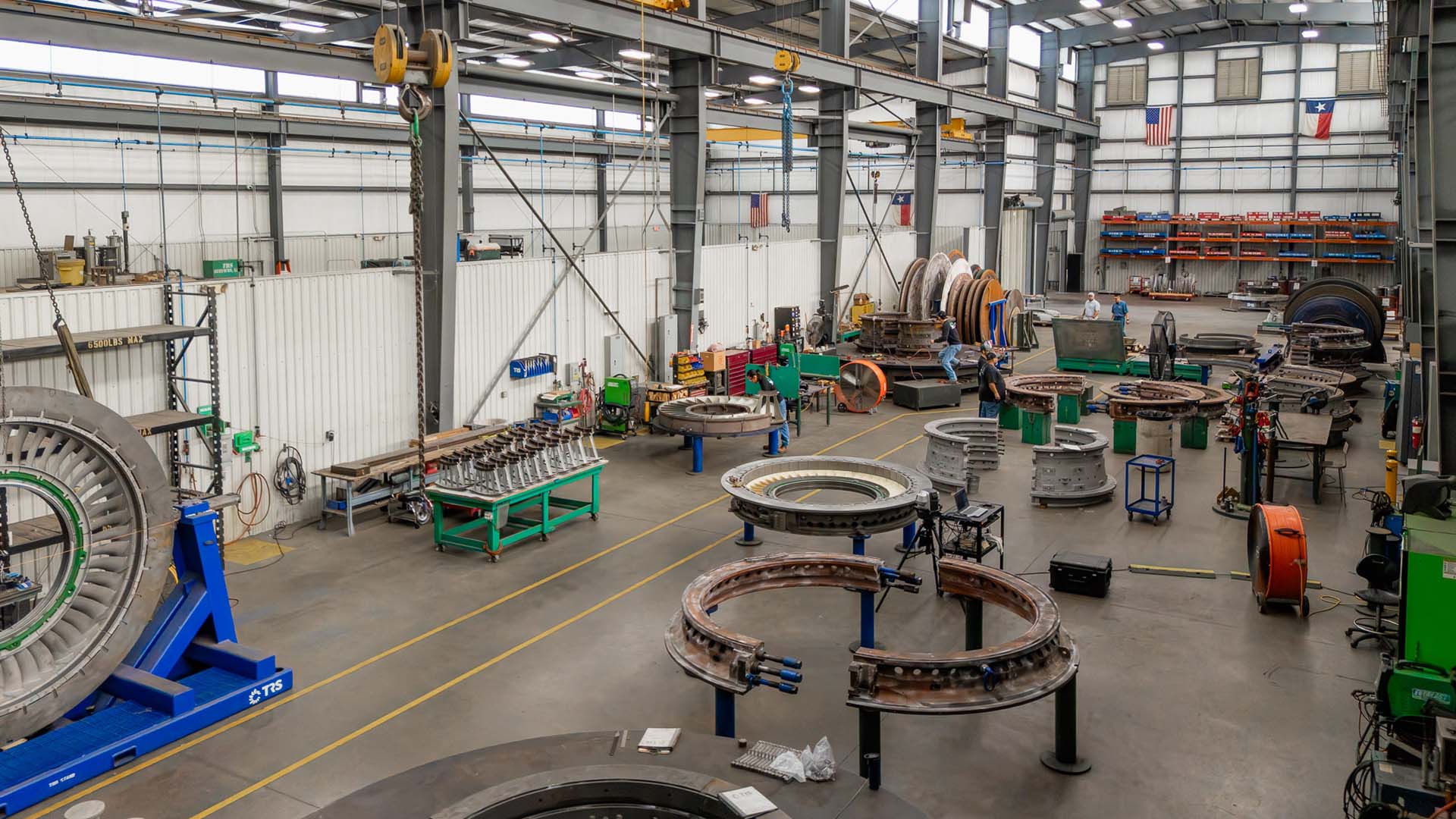
TRS operates a dedicated turbine repair facility with welding, machining, coatings, brazing, heat treatment, EDM drilling, waterjet machining and extensive inspection capabilities.
Weld Repair
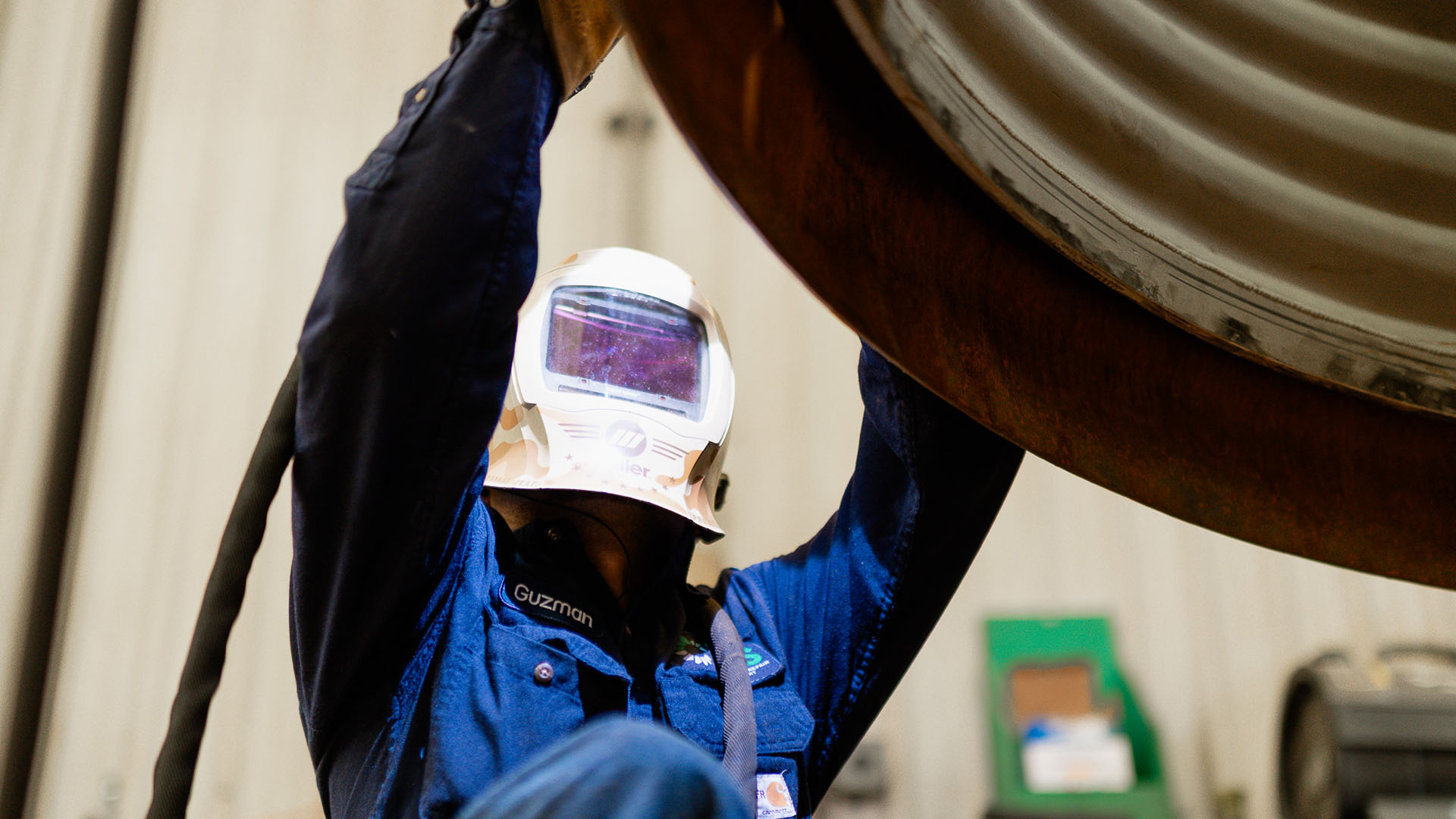
Welding can restore material that has been lost through wear, cracking or other damage. The repaired area can then be machined to restore the required geometry.
Brazing
Brazing can be used for certain specialized turbine component repairs. TRS uses vacuum furnace, honeycomb and wide-gap brazing processes as part of its repair capabilities.
Coating Restoration
Protective coatings can play an important role in the service life of turbine components. Depending on the component and application, repair programs can include restoration of thermal barrier, corrosion-resistant or other specialized coatings.
TRS’s coating capabilities include processes such as HVOF, low-pressure plasma spray, air plasma spray, diffusion coating, aluminizing and platinum plating.
EDM Drilling
Cooling holes and other small, precisely positioned features can be difficult to restore using conventional machining methods. Electrical discharge machining, or EDM, allows these features to be created or restored with high precision.
TRS uses EDM drilling for applications including cooling holes, fine channels and other high-spec turbine features.
Why Inspection Is Critical Before Gas Turbine Repair
A component should not automatically be repaired simply because damage is visible. The first step is determining the full condition of the part and whether the damage falls within an acceptable repair envelope.
Inspection can identify cracks, dimensional changes, material loss and other defects that may not be apparent from a visual examination. TRS uses multiple nondestructive testing and quality assurance methods, including ultrasonic testing, X-ray, eddy current, magnetic particle inspection, liquid penetrant testing, dimensional gauging and digital scanning.
This information helps establish a repair scope and can also determine whether a component should instead be replaced or manufactured new.
Repair or Replace: How the Decision Is Made
Not every damaged gas turbine component is a candidate for repair. The decision typically depends on the type and extent of damage, component history, remaining service life, repair requirements, turnaround time and the economics of restoration compared with replacement.
For example, TRS notes that repair may be appropriate for buckets and blades with issues such as tip damage, trailing-edge damage, cracks or seal wear, while severe creep, root or dovetail wear and significant airfoil distortion can push a component toward replacement.
Other factors can include:
- Whether the component remains structurally sound
- How much material must be restored
- Whether critical dimensions can be recovered
- The availability and cost of replacement parts
- Required outage schedule
- Remaining expected service life
- Whether an updated design or material is desirable
When repair is no longer technically or economically appropriate, new turbine parts manufacturing can provide another path. TRS manufactures replacement components for heavy industrial, light industrial and aeroderivative gas turbines.
Which Gas Turbine Repairs Are Most Urgent?
The urgency of a repair depends on the component, its condition and the consequences of continued operation. A component with a developing crack in a critical location may require a very different response from one with cosmetic surface deterioration.
Hot-section components generally receive significant attention because they operate under severe thermal and mechanical conditions. However, compressor components, seals and stationary hardware can also affect turbine performance and reliability.
When an inspection identifies a condition that could affect safe operation or turbine performance, maintenance teams can use the findings to determine whether the component should be repaired during the current outage, monitored, repaired on an expedited schedule or replaced.
Planning Gas Turbine Component Repairs Around an Outage
Repair planning is particularly important for major gas turbine outages. Components may need to be removed, transported, inspected, repaired, recoated, tested and returned to the plant within a defined schedule.
Starting the process early gives maintenance teams more time to identify repair requirements and account for unexpected findings. It can also provide more options if an inspection reveals that a component cannot be economically repaired.
TRS emphasizes outage planning, contingency strategies and repair-versus-replace decisions as part of its broader turbine support services. Its resources include guidance on gas turbine maintenance and outage planning, including outage readiness and repair planning topics.
What to Have Ready Before an Outage
For critical turbine components, maintenance teams can benefit from assembling relevant information before the equipment reaches the repair facility.
- Turbine model and frame information
- Component identification and part numbers
- Previous repair history
- Inspection records
- Operating history
- Known damage or suspected failure modes
- Required return-to-service date
- Applicable engineering and quality requirements
Having this information available can help the repair team establish an appropriate inspection and repair strategy more efficiently.
Gas Turbine Components TRS Services
Gas turbine repair is not limited to one type of component or one turbine platform. The appropriate repair approach depends on the equipment, damage mechanism and required operating performance.
TRS supports turbine components across GE, Siemens, Alstom, MHI, Solar and other platforms. Its capabilities cover combustion hardware, turbine components, compressor components, seals and stationary parts.
For example, TRS’s GE turbine repair services cover models ranging from Frame 3 and Frame 6B to Frame 7FA and Frame 9 B/E equipment. The company also supports Siemens and Siemens Westinghouse equipment, along with other turbine platforms.
Frequently Asked Questions About Gas Turbine Repairs
What gas turbine parts are most commonly repaired?
Commonly repaired gas turbine components include blades and buckets, vanes and nozzles, combustion liners, combustion baskets, transition pieces, fuel nozzles, shroud blocks, compressor components, diaphragms, seals and stationary components. The specific repair frequency varies by turbine model, operating conditions and maintenance history.
Can gas turbine blades be repaired?
Yes. Depending on the type and extent of damage, turbine blades or buckets can undergo repairs such as tip restoration, crack removal, weld restoration, trailing-edge repair, platform repair, seal restoration and coating work. Inspection is necessary to determine whether a particular component is suitable for repair.
What causes gas turbine components to fail?
Common damage mechanisms include thermal fatigue, oxidation, corrosion, erosion, cracking, vibration, mechanical stress and dimensional wear. Components in the hot gas path are exposed to particularly demanding thermal conditions.
Is it better to repair or replace a gas turbine component?
There is no universal answer. The decision depends on the component’s condition, damage, remaining service life, repair requirements, replacement availability, outage schedule and total lifecycle cost. A detailed inspection can help determine whether repair or replacement is appropriate.
How are turbine components inspected before repair?
Inspection methods can include visual examination, dimensional measurement, liquid penetrant testing, magnetic particle inspection, ultrasonic testing, X-ray, eddy current testing and digital scanning. The appropriate methods depend on the component and suspected damage.
How long does gas turbine component repair take?
Turnaround time varies considerably based on the component, damage condition, repair processes and required inspection. Planning repairs before an outage can provide additional time to establish the scope and address unexpected findings.
Keeping Critical Turbine Components in Service
Gas turbine components do not all experience the same stresses, but many of the parts most critical to turbine performance can eventually require repair. Blades, buckets, vanes, nozzles, combustion hardware, transition pieces, compressor components, seals and stationary parts can all experience damage or wear that warrants professional evaluation.
The objective of gas turbine component repair is not simply to make a damaged part look usable again. Proper repair combines inspection, engineering judgment, specialized restoration processes and quality assurance to determine whether the component can reliably return to service.
For operators planning an outage or evaluating damaged turbine components, early inspection can provide more options. Explore TRS Services’ turbine component repair capabilities to learn more about available repair processes and supported components, or contact TRS to discuss a specific turbine component and repair requirement.