Gas turbines operate under extreme temperatures, high rotational speeds and demanding mechanical loads. Within these systems, turbine blades and vanes play a critical role in converting hot gas energy into useful mechanical power. Over time, exposure to heat, oxidation, erosion and repeated operating cycles can cause these components to deteriorate, potentially affecting efficiency, reliability and equipment availability.
When damage occurs, replacing every affected component is not always necessary. Depending on the type and severity of the damage, specialized turbine blade and vane repair processes can restore critical dimensions, address material defects and help components return to service.
For power generation facilities, oil and gas operations and other industrial users, understanding how turbine blades and vanes are repaired can help maintenance teams plan outages, evaluate repair options and manage long-term equipment costs.
The repair process involves much more than welding or resurfacing a damaged part. It requires detailed inspection, appropriate material restoration techniques, precision machining, coating work when necessary and verification that the finished component meets applicable engineering requirements.
What Do Turbine Blades and Vanes Do?
Although turbine blades and vanes operate in the same general section of a gas turbine, they serve different functions. Understanding their roles helps explain why each component requires specialized inspection and repair procedures.
Turbine Blades Transfer Energy From Hot Gas
Turbine blades, commonly called buckets on many industrial gas turbine platforms, are attached to rotating turbine wheels. As hot combustion gases pass over their airfoil surfaces, they generate forces that rotate the turbine rotor.
These components must withstand several demanding conditions simultaneously:
-
High operating temperatures and thermal cycling.
-
Centrifugal forces associated with high rotational speeds.
-
Oxidation and corrosion from exposure to hot gases.
-
Erosion caused by airborne particles or other contaminants.
-
Vibration and mechanical stresses during operation.
Even localized damage can matter because blade geometry, surface condition and clearances influence turbine performance. Repairs must therefore restore more than the component’s general shape.
Turbine Vanes Direct the Flow of Hot Gas
Turbine vanes are stationary airfoils that guide combustion gases toward the rotating blades at the appropriate angle and velocity. They are commonly arranged in stationary nozzle assemblies or vane segments between turbine stages.
Because vanes operate in the hot gas path, they can experience thermal fatigue, cracking, oxidation, erosion and deterioration of protective coatings.
Their stationary position does not make them less critical. Damage or distortion can disrupt gas flow, affect downstream components and contribute to reduced turbine performance.
TRS Services repairs both rotating and stationary turbine components, including turbine blades, buckets, vanes and nozzles across multiple industrial turbine platforms.
Common Types of Turbine Blade and Vane Damage
Before a repair specialist selects a restoration method, the component must be evaluated to determine what has failed and how extensively it has been affected. Different damage mechanisms require different repair strategies, and not every damaged component is a suitable candidate for repair.
Cracking and Thermal Fatigue
Repeated heating and cooling cause turbine materials to expand and contract. Over time, these thermal cycles can contribute to fatigue cracking, particularly in areas exposed to high thermal gradients or stress concentrations.
Cracks may develop around airfoil surfaces, edges, platforms or other critical features. Their location, depth and extent help determine whether the damage can be removed and repaired without compromising the component’s integrity.
Oxidation, Corrosion and Erosion
High-temperature oxidation gradually affects exposed metal surfaces, while corrosion can develop when operating conditions and contaminants attack component materials. Erosion occurs when particles or other material gradually remove surface material.
These processes may alter airfoil geometry, reduce material thickness or compromise protective coatings. Repair may involve removing damaged material, restoring the affected surface and applying an appropriate protective coating.
Tip Wear and Dimensional Changes
Turbine blade tips operate with carefully controlled clearances relative to surrounding stationary components. Wear or damage in this area can affect leakage and turbine efficiency.
Other dimensional problems can develop at trailing edges, platforms, sealing surfaces and attachment features. Precision restoration is essential because even a visually minor deviation can affect component fit or performance.
Coating Deterioration
Many hot-section turbine components use protective coatings to improve resistance to oxidation, corrosion and high temperatures. Thermal barrier coatings help reduce heat transfer into the underlying metal, while other coatings provide different forms of environmental protection.
When coatings deteriorate, the base material may become more vulnerable to operating conditions. Depending on the component and coating system, repair may involve removing damaged coating, preparing the surface and applying a replacement coating according to the applicable specifications.
For additional background, see TRS Services’ article on what causes gas turbine degradation.
The Turbine Blade and Vane Repair Process
Turbine component repair typically follows a controlled sequence of inspection, damage assessment, restoration and final verification. The exact process varies by turbine model, component material, repair history and the requirements established for the part.
1. Initial Inspection and Damage Assessment
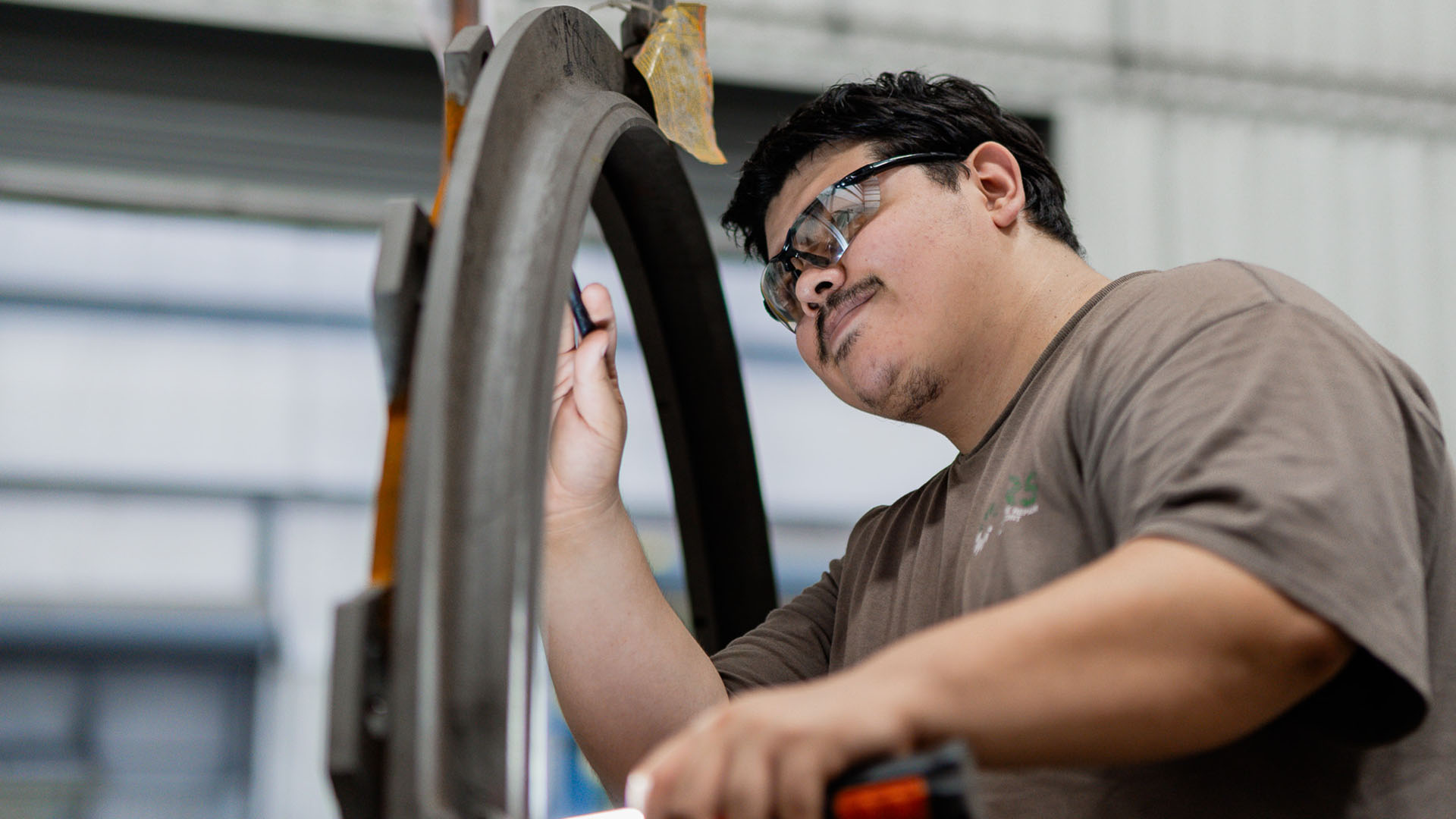
The first step is to evaluate the component’s condition and identify areas that require attention. Technicians examine the part for visible cracks, erosion, oxidation, coating loss, deformation and other signs of deterioration.
Depending on the component and suspected defects, inspection may include:
-
Visual examination and photographic documentation.
-
Dimensional measurements to identify wear or distortion.
-
Fluorescent penetrant inspection to reveal surface-breaking defects.
-
Other nondestructive testing methods when appropriate.
-
Review of component history and previous repair records.
Nondestructive testing, often abbreviated as NDT, helps identify certain defects without damaging the component. No single inspection method detects every type of flaw, so specialists select methods based on the material, component geometry and suspected damage.
The findings establish whether the component is a viable repair candidate and which restoration procedures may be appropriate.
2. Cleaning and Surface Preparation
Before detailed repair work begins, components may need to be cleaned to remove deposits, oxidation, old coatings and other contaminants that could interfere with inspection or restoration.
Methods vary according to the component and the material being removed. Abrasive cleaning, for example, may be used to remove surface contaminants or prepare a part for additional inspection.
Surface preparation must be controlled carefully. The objective is to expose the relevant material and create suitable conditions for subsequent work without introducing additional damage or removing material unnecessarily.
3. Crack Removal and Weld Restoration
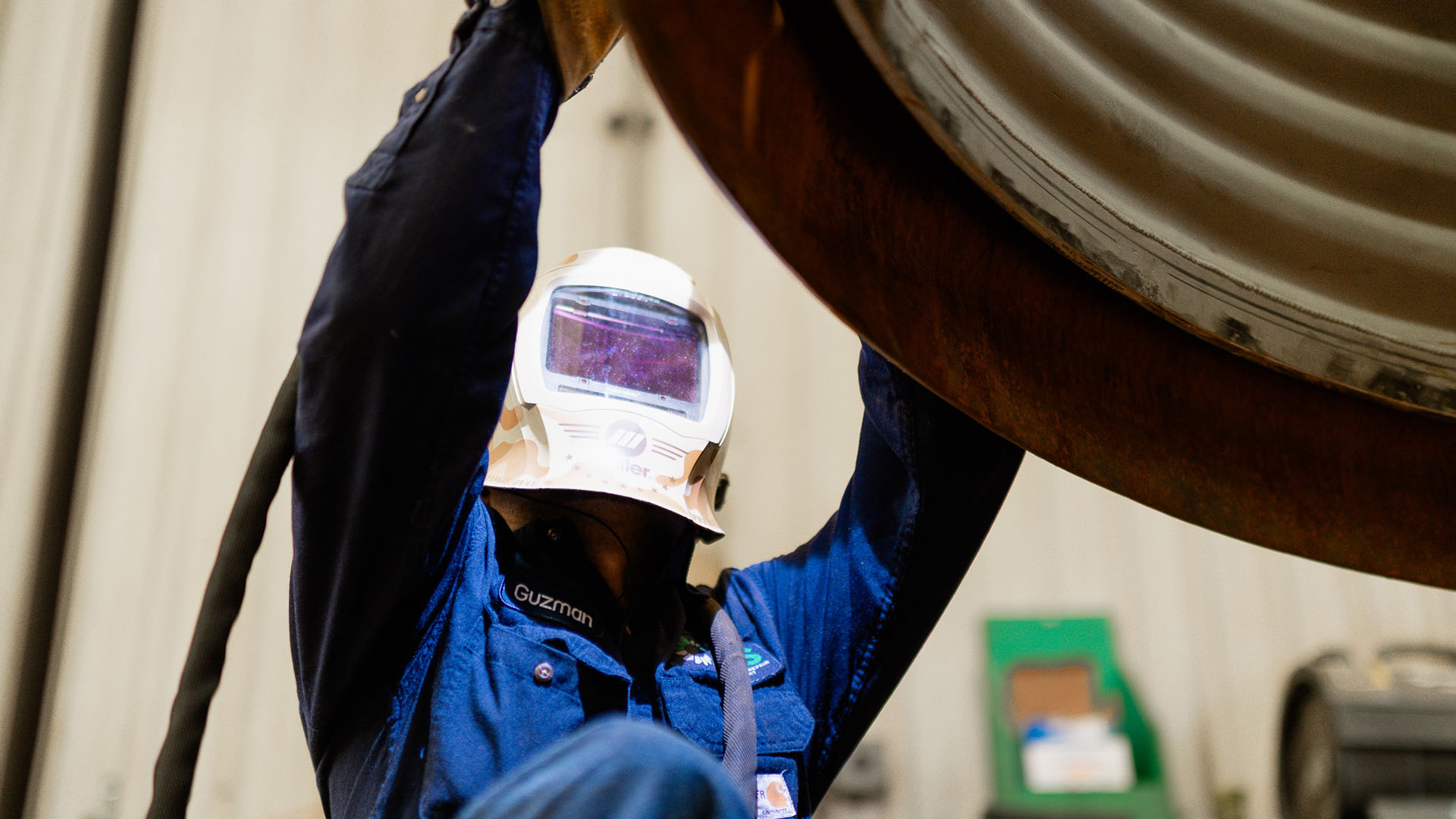
When a component has repairable cracking or localized material loss, a specialist may remove the affected material and restore the area through precision welding or another approved process.
Welding methods must be selected according to the component alloy, damage location and applicable repair requirements. Turbine components may use specialized high-temperature alloys that require careful control of heat input and repair procedures.
Depending on the repair, the work may involve:
-
Removing defective material to an approved extent.
-
Preparing the repair area.
-
Applying compatible filler material when required.
-
Controlling heat input and thermal conditions.
-
Performing subsequent inspection to verify the repair.
Not every crack can be repaired safely. Cracks in critical locations, extensive cracking or damage associated with unacceptable material degradation may make replacement the more appropriate option.
TRS Services provides precision turbine component repair using specialized restoration processes, including welding, brazing, machining and coating restoration.
4. Dimensional Restoration and Precision Machining
After material has been restored, the component may require machining or finishing to return it to the required geometry.
This stage is particularly important for turbine blades and vanes because their airfoil profiles influence how gases move through the turbine. Changes to the profile, trailing edge, tip or sealing surfaces can affect clearances and aerodynamic performance.
Machining and finishing may be used to restore:
-
Blade or vane airfoil contours.
-
Tip dimensions and clearances.
-
Trailing-edge geometry.
-
Platform surfaces and interfaces.
-
Sealing features and other critical dimensions.
Measurements are compared with the applicable engineering specifications or approved repair criteria. The goal is to ensure that restoration work produces a component suitable for its intended operating conditions, rather than simply one that appears visually acceptable.
5. Protective Coating Restoration
If the repair scope includes coating damage, the component may undergo coating restoration after the necessary surface preparation and dimensional work.
The appropriate coating depends on the component material, operating environment and original or approved engineering requirements. Thermal barrier coatings, oxidation-resistant coatings and corrosion-resistant coatings serve different purposes and are not interchangeable without engineering justification.
Coating restoration may involve removing degraded material, preparing the substrate, applying the specified coating and verifying the finished surface.
The process must account for coating thickness, coverage and any dimensional limits that affect component fit or performance.
6. Final Inspection and Quality Verification
Before a repaired component is released, it must undergo the inspections and checks required by the applicable repair procedure.
These checks may include dimensional verification, visual examination, additional nondestructive testing and assessment of coating condition. Depending on the component and repair, other specialized inspections may also be necessary.
Final verification helps establish that the completed work meets the required criteria and that any identified defects have been addressed appropriately.
A complete repair record can also support future maintenance planning by documenting the work performed and the component’s condition at the time of repair.
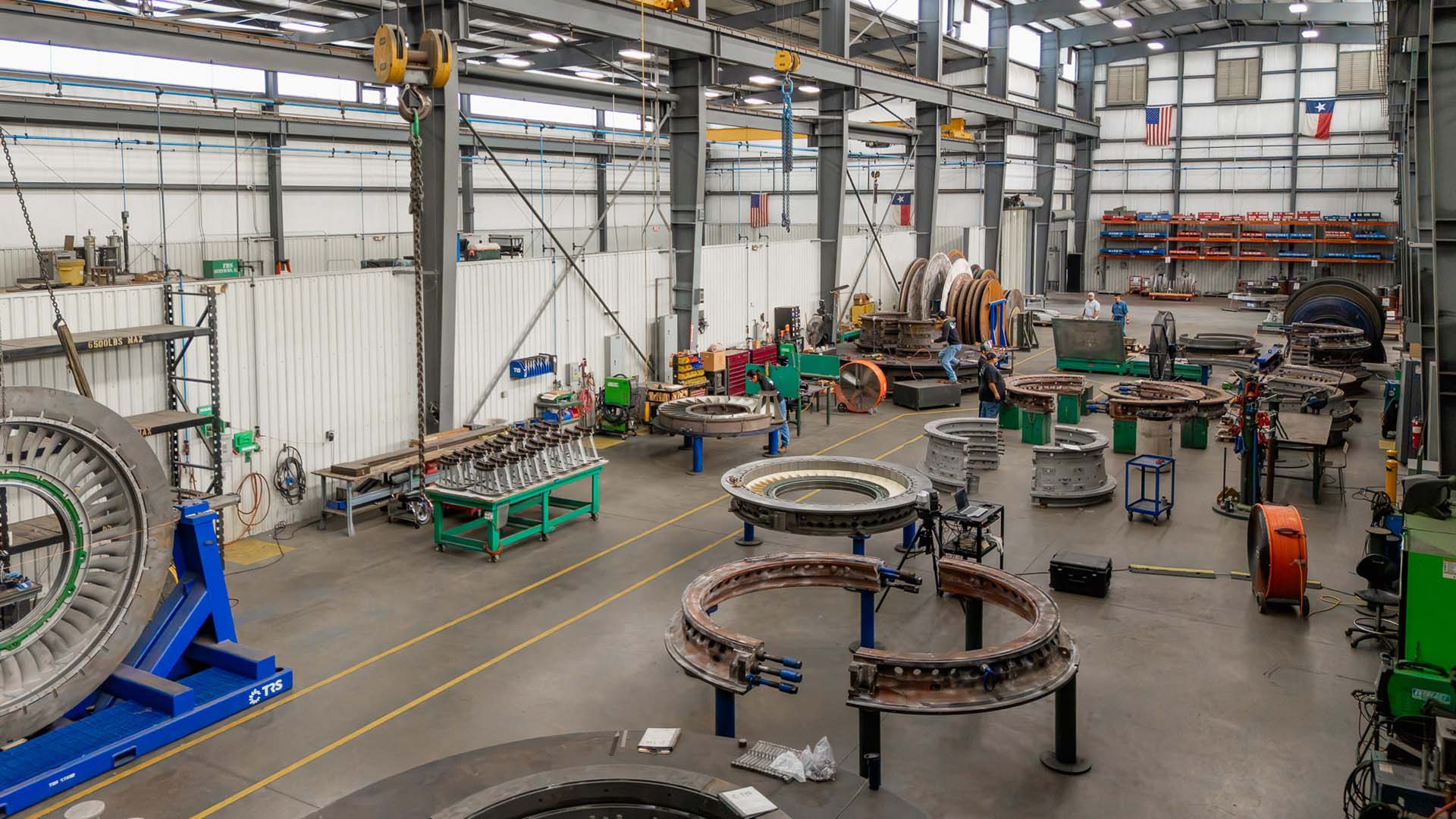
TRS provides specialized turbine repair shop capabilities that support complex component restoration, precision machining and inspection activities.
Repairing Turbine Blades vs. Turbine Vanes
Although blades and vanes can undergo some of the same restoration processes, their differences influence how repair work is performed.
| Repair consideration | Turbine blades or buckets | Turbine vanes or nozzles |
|---|---|---|
| Primary function | Transfer energy from hot gases to the rotor | Direct hot gas flow toward rotating blades |
| Key concerns | Centrifugal stress, airfoil damage, tip wear and cracking | Thermal fatigue, cracking, erosion and flow-path distortion |
| Common repair needs | Tip restoration, crack repair, trailing-edge restoration and coating work | Crack repair, weld restoration, machining and coating restoration |
| Important verification | Airfoil geometry, attachment features and clearances | Airfoil profile, segment geometry and critical interfaces |
These are general distinctions rather than universal rules. Specific repair requirements depend on the turbine model, component design, material and damage condition.
Why Component-Specific Repair Procedures Matter
A repair process that is appropriate for one component may not be suitable for another, even when both parts appear to have similar damage.
For example, a damaged blade tip may be a candidate for restoration if the remaining material and component condition meet the required criteria. A vane with extensive cracking or distortion may require a different approach, potentially including replacement.
TRS Services supports repairs for multiple turbine platforms, including GE, Siemens, Alstom, Mitsubishi Heavy Industries and Solar equipment. Its Siemens and Westinghouse turbine repair capabilities include specialized repair work for vane segments, nozzles, housings and other stationary components.
When Should Turbine Blades and Vanes Be Repaired or Replaced?
Repairing a turbine component can help control maintenance costs and reduce the need to procure replacement parts. However, repair is not automatically the best choice for every damaged component.
The decision should account for technical feasibility, expected reliability, repair costs and the effect on outage schedules.
When Repair May Be Appropriate
Repair may be worth considering when the component remains structurally suitable for restoration and the damage can be corrected using an approved procedure.
Potential candidates include components with:
-
Localized tip or trailing-edge damage.
-
Repairable cracks in approved locations.
-
Limited erosion or oxidation.
-
Coating deterioration that can be corrected.
-
Wear or dimensional changes that can be restored within specified limits.
When properly executed and verified, repair can help extend the useful life of valuable turbine components while reducing replacement expenses.
When Replacement May Be the Better Option
Some components have damage that cannot be corrected within acceptable engineering limits. Severe cracking, extensive material loss, significant distortion or damage to critical attachment features may make replacement necessary.
Replacement can also be worth evaluating when repeated repairs become expensive or when a new component offers a meaningful operational advantage.
To compare the options, maintenance teams should consider:
-
Total repair and replacement costs.
-
Expected remaining service life.
-
Repair and procurement lead times.
-
Outage schedule requirements.
-
Component availability.
-
Technical risks and inspection findings.
For a deeper look at these considerations, read TRS Services’ article on repair vs. replacement for critical turbine components.
If repair is no longer technically or economically viable, new turbine parts manufacturing provides another option for sourcing components suited to the required equipment and application.
How Professional Turbine Repair Supports Equipment Reliability
Turbine blade and vane repair is an important part of maintaining industrial gas turbines. When components are properly evaluated and restored, repair programs can help operators manage maintenance expenses, preserve valuable equipment and plan outages more effectively.
Reduce Unnecessary Replacement Costs
Turbine components can represent a significant investment, particularly when specialized parts have long manufacturing or procurement lead times. Restoring an eligible component may reduce the need for a new part and help operators allocate maintenance budgets more efficiently.
The financial benefit depends on the component, repair scope and expected service life after restoration. Repair decisions should therefore be based on both technical findings and lifecycle cost considerations.
Support Outage Planning
Component condition assessments can help maintenance teams determine which parts require repair, which should be replaced and which may remain suitable for service.
Beginning this process before a planned outage gives operators more time to establish repair scopes, coordinate component transportation and evaluate replacement options if necessary.
For more guidance, explore TRS Services’ resources on turbine maintenance, component repair and outage planning.
Extend the Useful Life of Critical Equipment
A turbine’s operating environment inevitably exposes components to wear. While repair cannot eliminate every form of degradation, appropriate restoration can help preserve components that remain suitable for service.
Combining regular inspections, maintenance planning and qualified repair work gives operators a structured approach to managing component condition over time.
Restore Critical Turbine Components With TRS Services
Repairing turbine blades and vanes requires specialized knowledge of high-temperature materials, component geometry, restoration processes and inspection requirements. From initial damage assessment through welding, machining, coating restoration and final verification, every stage plays a role in determining whether a component can safely return to service.
For power generation facilities and other industrial operators, choosing the right repair strategy can help control lifecycle costs, support outage planning and maintain the reliability of critical turbine equipment.
TRS Services provides turbine component repair solutions for a range of industrial gas turbine platforms. Its capabilities include the restoration of blades, buckets, vanes, nozzles and other critical components, with repair methods selected according to component condition and applicable requirements.
If your maintenance team is evaluating damaged turbine blades or vanes, visit the TRS Services turbine component repair page to explore available capabilities. You can also contact the TRS Services team to discuss your component requirements, repair options and upcoming outage schedule.